A Drinkwalk April 10, 2013
Posted by newsthatstaysnews in Uncategorized.add a comment
The signs on the bus stands in Adelaide, and the ads on the radio, are all extremely concerned with the danger of drinkwalkers, the pedestrian equivalent of drinkdrivers. In the spirit of bushwalking (as they call tramping in Australia), I might think of it a different way.
I arrived in the home my friends stay in, a great ocher wooden building, which a man had built with his own hands a long time ago, when he was as old as my friend’s partner is now, and I was barely alive. There’s a hammock on the front porch. Inside a pale blond woman who would usually swathe her wrinkles in some sort of cosmetics, a short-haired and pinker woman with a cigarette, and a ruddy white-haired man who greets me, and whom I acknowledge but walk by with my twenty kilo backpack to set it down. He comes in later, tells me I’m fast, a great mind, like my friend’s partner (note the classic omission), and he’s slow, and apologizes for this. His words are slow, his french accent improbably strong. He says he just wants a few minutes to talk to me alone, without the other people. All he wants is for me to apologize for not stopping to chat on my way in, and maybe to relax a little. It takes a while for me to realize this. I’ve never been in a house owned and run by a drunk.
The second night, I’m trying to jam with our shorter-haired flatmate. Her rhythm is difficult for me to follow, but I try hard to get the swing of it, before wandering out to grab some stir fry. Our homeowner suggests I try to play something, and I make the best of ‘Romance Anonimo’ with an acoustic he’s jacked in, and an amp he’s turned up. I hand the guitar off to him, and he wanders in to our flatmate to play with her. He sort of follows her rhythm, keeps to her chord changes, anyway. You can hear from the violence with which he attacks the strings in his crescendos, from how hard he bends, that he’s not about the nylon strings he’s playing. When he wanders in, I ask him if he plays steel.
He does. He starts to show my friend’s partner a chord progression. Am – G. Am – G. He has fun with it. I eat a little stir fry. I drink a few sips of wine. Three run-throughs of the romance aside, I haven’t touched a guitar for a season, haven’t really tried in far longer. But, music calls to you. It’s not just the inexplicable and well-attested urge to buy guitars, it’s the urge to play them, to feel the rhythm, to surprise it. They say you can fit about six things in working memory, and maybe that’s down to three when I’m trying to keep up a chord progression. It’s a bit like the tower of hanoi, trying to piece together a new idea, something I haven’t played before, when there isn’t room in my head to lay all the pieces out and put them together leisurely. And yet, at some point, all the remaining moves are sort of obvious. I imagine it like a miniature ship, slowly and carefuly assembled and folded, just so that at some moment, it can slip into its bottle, and snap open. And then, after that moment of magic, it’s just a ship in a bottle, a neat two bar riff, something I’ve seen and heard a million times.
He gets going, I pick up the acoustic. I ask him if he’s going to keep playing chords. He starts showing my friend’s partner a longer one. Am – G – Em – FG. It’s a little complicated for someone who’s never played guitar before, but he starts getting into it. Maybe he misses this, too. It takes forever for me to learn the progression, as it always does, but it’s so simple that eventually even I get the hang of it. We jam. Sometimes I get a few arpeggios in. Play different inversions. I take a few stabs at a bass line, with little success. But, it’s beautiful just to get lost in the flow again. At some point, I’m done, I’ve said what I have to say, and I let it go. I have to eat my stir fry before it gets cold again.
Later, he starts in again. It’s hard to string together his words sometimes. Accents, french, kiwi, pile up. Vague statements about value mix with loaded flattery, stutter, eventually reemerge. He says if he was me, he’d tell himself to piss off. I tell him that he must not have very good manners as a guest.
I feel a very muted fear because I’m a grown man and this man has no real power over me. Because he hasn’t drunk that much, because he doesn’t get worse than passive-aggressive. Because I’ll be gone in a few days. But, within this small realm of muted dread he creates, his rule is absolute. I never quite exactly know what he’ll do next, and it unnerves me. No one says anything to him about his behavior, and it discomforts me. It is his house, and I am in this sense in his debt, and this wrong-foots me. There is only waiting for the next night to see what happens.
The next night, early, before dinner, I sit with him and his wife as they drink beer together, and hear their stories, how they came to live in a hand-built cabin on a hill by the Onetangi forest on a small viticultural island in the Hauraki Gulf. He says she wants him to make something of himself, keeps expecting him to go out and do and not just say. He says things that aren’t coherent. Perhaps that she feels trapped. She suggests again that she’s sort of paying for previous decisions. That she followed her dreams here and look where that’s gotten her. I leave for dinner.
Two things happen that night. One is that he berates my friend’s partner for washing dishes in his face, while he’s eating milkless mac-and-cheese. He tells him vehemently that they wouldn’t do that in France. Then again, he laughs, we’re not in France, right?
But the other, ah, we have laid six wine glasses on the table. My friends have good wine, for they are occasionally paid with the final fruit of their labors. We pour four glasses. We pour a glass for the lady of the house. I will not forget that there is a silence. She asks us to pour her husband a glass.
Ursula LeGuin says that it is a novelist’s impossible task to take that which cannot be expressed in words, and express it in words. I am not and cannot be a novelist on either count. The moment is sublime.
He Tangata Kī Tahi April 10, 2013
Posted by newsthatstaysnews in Uncategorized.add a comment
(Maori for a man who speaks only once, i.e. is good for his word)
Somehow, my friend and I each come to describe the Coromandel. She sees a deep blue sea and low, round, rolling hills, above which is a long white cloud. I see a tarantula sleeping under a hat.
Hers is an accurate and relevant description, and a good segue to Aotearoa, Maori for ‘land of the long white cloud,’ and another name for New Zealand. In a way, its clarity and directness feel familiar – I wonder if good nonfiction writing is habit forming. I fear that suspect poetry certainly is: I might say my descriptions tend to try to capture something nontrivial or nothing at all. She better describes it as characterized by either timidity or swagger. At any rate, like using too many commas, it is far too deeply engrained in how I think about words to do much about it either way. For what it’s worth, I stand by my description, but I would also be the first to concede that if you’ve never seen the Coromandel, it will be of no use to you. Even if you have seen a tarantula doze under a hat, it won’t help you in the least to picture the scene before us.
I think about this at other times. At some point, we swim in a small cove. The water is cold, and the volcanic rocks beneath it are sharp, so I get out. The tide is rising and the beach is steep, so with every big wave gravel rolls up higher, then tumbles back down at the ebb. It’s not as delicate as the sound on the beach beneath the island’s world war two gun emplacements, because it’s missing a higher wind-chime clattering sort of noise. We discuss this a little bit. It sounds a bit like gravel sliding, but it’s rounder and more polished, and besides this sound is unfamiliar. It’s a little more like grain, like when you pour rice into a cup, only a little richer in a way I still can’t characterize.
When I sit beneath a pōhutukawa, I think it looks like an old a withered grey dragon, claws sunk into the cliffside, ridges and scales emerald green. It twists , and it dries, and it threatens to flake like dry skin. When I stand on the beach beneath the guns at Stony Batter, I think about the distant pale blue coromandel, the unnaturally regular slope of the little island on the left, looking for all the world like a great bullet train rising out of the weeds. I think about the golden hills beneath the guns, scabrous with evergreens.
I try to imagine what it would be like if I felt this urge to capture in words often, much less if I felt it around people. It would be overwhelming.
VX358 April 9, 2013
Posted by newsthatstaysnews in Uncategorized.add a comment
The phrase ‘chariot of the damned’ kept suggesting itself to me. On one plane, tinged eerily blue and with purple running lights in the cabin, were all the people who thought that arriving in time for work in boston after having slept only on their five hour flight from the bay area was worthwhile. People who had evidently dreadfully important things to do on both coasts. Computer types. An emotionally unstable young track runner and her worn out mother. Students on spring break? Some vices are their own punishments.
I did, after missing the BART train to the airport, stop by a used bookstore and find a copy of the first Discworld novel at a rather more reasonable price. It was a bit of a retread of The Hitchhiker’s Guide to the Galaxy in fantasyland, and probably not as good as the first story, but funny and enjoyable all the same.
And then, I was awake, and in Boston, and on my way to work, improbably in a bespoke suit and a borrowed pair of sunglasses. It is interesting to be that guy with the tailored suit and the stylish glasses. Men seem to react more openly than women, and more diversely. Programmers seem generally less friendly. Just once, I ran into some fool wearing an unnecessarily pretentious blazer, and he looked downcast to be beaten at his own game. Which, lest the same fate await me, I have retired from again. Reflected-sound-of-underground-spirits indeed.
NZ8 April 9, 2013
Posted by newsthatstaysnews in Uncategorized.1 comment so far
Across the way from the coffeeshop where my friend’s flatmate works when she feels like it, in what might have been a clothes shop, we traded four dollars for a 2004 copy of The Year’s Best Nonrequired Reading. There was a quick back and forth as to who should keep it. I read a few stories, learned that it’s not a tale of misfortune that’s depressing to read, but one of lost hope. Then, I played trump: I didn’t know that I could fit it in my luggage. The same argument left ‘что делать’ behind. I was curious what Lenin would have to say about the right to criticize party policy. Bertrand Russell had been quite impressed with his strength of conviction, comparable only to William Gladstone, which may give all of us pause to wonder. I’m afraid it was rather more parochial than I had hoped for, and made me wonder why the USSR had bothered to have the thing reprinted, much less in English. Apparently criticism had been allowed by the German socialists who’d then also served in a government and thus given up being revolutionaries at all, as well as some chap named Bernstein whom I’ve never heard of, but whom he really, really didn’t like. There was a good bit about criticism slowing progress, but only perhaps a very broad argument that a lot of people were both in favor of open criticism of the party and also averse to bloodshed, and therefore rather poor revolutionaries.
When I finally reached it after a brief detour through the gorgeous Auckland Public Library, the Auckland Airport was big and flashy. I don’t know what to say about an airport that has three bookshops in duty free.
One thing might be that I read fifty pages of The Colour of Magic, which is a sort of fantastical book about a tourist with poor language skills, a comfortable exchange rate and an enchanted, vicious and indestructible luggage. There is a matter of fact acceptance of the ridiculous to be savored in this Discworld, but not for thirty five NZD in the departure terminal.
Another might be that I read the first two chapters of ‘The Hunger Games’ and was mildly impressed. Understated enough to make the protagonist feel real, focused enough that her emotional attachments felt genuine and drew me in. Kept herself from getting drawn into the wilderness/future history aspect of her work, kept it focused on what it felt like to be a young person in this world. I think this might be what Harry Potter feels like to those who quite liked it. As my friend’s partner said, it feels like the real fantasy in that novel is upper-class british boarding school, not the potions or wands. Maybe I just relate more to having been a loner at that age, to the love of the wild, to a less melodramatic sense of not belonging.
At any rate, my allotted hours expired, and I boarded my flight. There was a magnificent corned beaf, red cabbage and mashed potato diner, which I accompanied by lightly buttering half the corn on the cob in my backpack. I offered, but my neighbors were more staid. So, I finished it standing in line at US customs, just before tossing it away and answering ‘no sir, there are no fruits or vegetables in my bag.’
VA8072 April 9, 2013
Posted by newsthatstaysnews in Uncategorized.add a comment
I was struck by how much older the crowd in Adelaide was, versus Chennai. Mostly in pairs, a few small groups. Those who were alone tended to have books or newspapers, not electronics. They were more impassive, perhaps because they knews exactly how many minutes until boarding. They knew how long they would need to stave off boredom. I’d left my friend’s paperback copy of The Girl Who Kicked the Hornet’s Nest on her shelf, so I was out of luck. I was impressed by his narrative skill; too often I’ve read books whose jumps back and forth were easily characterized as either jumps from action to filler or jumps back. Here, they all held me, even though the cold stoicism I remember from the swedish movie version of ‘The Girl With The Dragon Tattoo’ had been replaced with frenetic conspiracy. So into it that in my tiredness I at one point called out my friend, playing cribbage with her partner on the other couch, ‘Do you suppose any of this is true?’ to which she replied with patience and dignity beyond my capacity to reproduce here.
Once in the air, I learned that A N Zed charges extra for movies on subepic flights. So, I listened to a bit of Liszt whose name I cannot now recall, and then borrowed my frequent-flying neighbor’s book. While the stewards were busy bringing her even more offers, information and warmth, I read the first part of The Marriage Plot.
I’m underwhelmed. Eugenides is always mentioned in the same breath as Franzen (whom I’ve never read) and David Foster Wallace, who may not be the bees knees, but is certainly brilliant, persuasive, and darkly but irrepressibly funny. I imagine that the compulsion, the desire and darkness that I have ever felt is but the shadow of what hard drugs bring, but I’ve felt them, and he makes it vivid, and funny, and sad to know them and to be human.
I expected something like that. I got a straightforward novel about being an ivy league english major, not so much insightful as well informed. I or my friends experienced some form of most everything he described up to the point where I put the book down. There’s a scene where the protagonist goes to a party at a fraternity to have sex with someone. She wants, we learn, to humiliate herself. Yes, I agree, I believe it, and precisely for that reason, I should like to know why. I might hope that the author would take many years’ wisdom and as many score of minutes’ concentration and care as necessary, and tell me what the feels like. Even if the author has never personally felt that way, to explain how that occurred to the protagonist, and what made her impulses feel right, and to let me feel the experience.
The novel flirts with philosophy, with all the passion of a grown woman herding kids at a Justin Bieber concert. Apparently abstract ideas are ruining the poor child’s life. Zounds! Another book that’s almost totally true is the yellow pages. I for one, would just as soon have read more of “The Girl Who Kicked the Hornet’s Nest”.
Improbably enough, my friend’s partner proved to be reading a paperback copy of ‘The Girl Who Played with Fire.” Sure enough, I picked up, and I read for a while, and got stuck on the the author’s efforts to convey what it’s like to be taken with mathematics. Like a newspaper article about a subject you happen to know about, it was broadly disappointing. It had all the passion of a wikipedia entry with its headings and sample formulas cut and pasted into plain text and thinly disguised with transitions. So, I abridged the novel. I cut the math, I cut the other story strands which started to creep in around page forty, and I cut the whole novel at page fifty. I trust that the unabridged novel is a gripping crime thriller, but the one I read was a harmless if odd and slightly violent short story I’d call ‘The Girl Who Went to the Beach.’
SQ 529 April 9, 2013
Posted by newsthatstaysnews in Uncategorized.add a comment
Almost the entire plane to Singapore were young men, alone. They didn’t have smart phones. And so they looked around the Chennai airport with a bored attentiveness, trying to find in their surroundings something to while away the minutes. I read the first chapter of ‘From Russia With Love’ (I don’t want to hear it), and was again impressed that Ian Fleming really loved to describe clothes and gardens and beautiful things, and seems as though he might have been rather put out that he had to write spy novels in order to get paid to do so. On the plane, I read three newspapers. The Wall Street Journal Asia is garbage, its articles often devolving into ‘this company is in country X. I was able to contact their spokesperson and read their website/press releases and was therefore able to fill out the rest of my column inches with words about it’. The financial times was a lot better, though it was still rather dodgy. Nothing, to me, felt like the odd professor’s column in the Hindu. Nicholas Nassim Taleb is right that to be cured of newspapers one should probably just read old ones. I am more convinced that I should make a point of getting books when I get home, as a sort of Methadone to my online Heroin.
The flight from Singapore was empty. The inflight entertainment taught me the days of the week in Russian, showed me a russian romantic comedy (hard-driven woman meets holy idiot, discovers that if only she would shut up and do what she’s told she’d be happy), and let me watch a really funny movie called ‘Atomic Ivan,’ which I’ll be damned if I can imagine quite how to get hold of with English subtitles in the states. I landed, the drug dogs sniffed me, and I walked out the door. I had then had twice as many cups of orange juice as hours of sleep in the past two day. As the marines in starcraft say ‘jacked up and good to go.’ A silvery toyota rolled up. “Want a ride?”
South Victoria Road: Sunrise – as it happened April 6, 2013
Posted by newsthatstaysnews in Uncategorized.add a comment
5.45am NZST The waxing crescent moon was bright in Aquarius and the eastern sky. A little above the big tree on the left side of the terrace. From without, the milky way was still visible. There was little enough I could recognize: scorpio, what might have been the southern cross. By the time I went in, checked the star maps and came back out, there was a faint blue-green line on the horizon, and the milky way was gone. The magellanic clouds will just have to wait, I suppose.
6.05am NZST The horizon is a sort of buff color. On the ridge across Waiheke forest, there’s a cornucopia of trees. Little palms, like asterisks pinned on sticks for display. Funny multi-tufted trees, each canopy supported by a separate stalk of what is still recognizably the same tree. Towards the ocean, a good old-fashioned tree, with many thick branches, low branching factor, standing guard on the end of the ridgeline.
6.13am NZST Venus, earlier brilliant, is now gone. The horizon has hardly changed color, as my eyes adapt to it, but the glow has spread until it covers my easy field of view, and the low clouds nearby are clearly visible against it. There’s a reddish glow against the horizon, holding it back from the faded-jean sky. The wooden terrace is still colorless, but the detail is clearly visible. The stains of yesterday’s dishwater, the discolorations around the nails, the grain in the coarse wooden table that sits on the northern end. To the south of the asterisk palms, rising along the hill, a stand of evergreens, one of them built like a layer-cake, just to keep me guessing.
6.20am NZST The color of the horizon is a bit like a honeydew melon, and three degrees higher is flatly grey. In between, a slowly brightening cloud, the color of deep-dyed salmon and then a fluorescent pink like a shipful of passengers’ raincoats might have.
6.28am NZST I can see a dark local cloud in relief against what is unmistakably a dusty blue sky, and the cloud has dimmed again to a sort of peach-yogurt color. My words betray me – I haven’t had breakfast yet. There’s a cat on the metal roof, or maybe a possum. I can see that the bench is yellower than the table surface, and less red than the table legs. I can see that the four-by-fours along the edge of the balcony are made of (yellowish wood), and not the faded grey of the railing they support. Detail creeps into the ridge across from me.
6.35am NZST The cloud is a washed-out dun. Beneath it, the haze is turning purple, and above it in my sky, the little slivers of darkened cirrus have been plugged in and retaken the neon grapefruit skin that had already left the sunrise behind.
6.40am NZST The sun is behind the ridge, finally up. The pale reddish orange behind the ridge feels brighter than I want to stare at. The forest below has stereotyped round canopies in a pale corroded-copper green. The cirrus clouds have all but washed out.
7.00am NZST A bowl of porridge with cinammon, apples, banana and dried apricots. The sun sits tangent to the ridge. I think with camera obscura you could see the trees.
Sarangkot March 22, 2013
Posted by newsthatstaysnews in Uncategorized.add a comment
I made my way to the base of the road to Sarangkot and checked my cell phone. A fair guess was two hours until sunset and six kilometers, and about twice the height of San Cristobal in Santiago, which I’ve walked up before in about an hour. My knees ached a little. I looked at the hills, and saw a few snatches of snow between the clouds, and of granite. I looked at the taxis. I smiled. A slew of minibuses had passed me, but only if I caught one along the road to Sarangkot could I be sure to arrive where I was going. I started up, past what might have been a rhododendron. The road stretched on.
At times, as I compared a map of unknown scale and extent to my own twists and turns, as my knees flared up and I slowed to a crawl, as the sun crept down and I realized that here, on the east side of the ridge, it would set the sooner, I questioned my judgment. Then a sharp bend in the road would take me to to the northern side, and each time a different view of the peak through the clouds, six thousand meters of spare, angular stone, and I would think “Machapuchare!”. The name evokes for me the austere flatness of the sacred mountain, the inconceivable bulk of the Tibetan plateau behind, the inexplicable towering of the Himalayas. It reminded me that for a moment in my life I stood before them in person, and that that moment would be bounded by nightfall. And I would walk on, not much faster, just on.
Somewhere along the road, I met two astronomers, gazing out over the valley, waiting for their applications to Chilean PhD programs to come back.
Somewhere further, I paid a village development tax. The sun had just set over the summit of Sarangkot.”How much further?”
“About forty five minutes.”
…
“Hello!”
“Hi!”
“Give me chocolate.”
…
As color began to disappear from the surroundings, the clouds dissolved from the peaks, and now the whole massif was clear as I faced the last hill, maybe a thirty meter rise. At the top, someone waved. I waved back. My knees ached. The dusty orange-red of twilight began to disappear even from Annapurna II, and so I started up the stairs.
A little past the top was my hostel; I set my bag down and collapsed against the check-in counter. The innkeeper kindly offered me dinner. Unfortunately, earlier in the day while sitting on a park bench, I had tried to eat a pebble for no better reason than because it was shaped like a peanut, colored like a peanut, and for good measure sitting inside a bag of peanuts. So, until I found someone to ask what to do about a chipped tooth, I thought I it best to abstain.
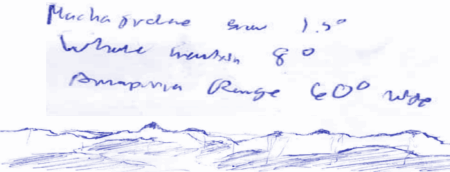
The mountains, it turns out, do turn purple just after sunset. I don’t know why I didn’t know that. There were more stairs, and my knees hurt, but the weight of the backpack was behind at the lodge, and as the stairway hugged the south face of the ridge, I would not catch sight of Machapuchare until the very top. So, I hobbled up, slowly. While I tottered, the other tourists decamped from the summit, and by the time I arrived the last of them, a tall, shaggy blond american with a book and a little nepali kid, were just walking away. I staggered to the bench on the platform on the northern edge of the ridge, looking out across the valley at one of the dozen tallest points on the planet. As only God and those with smartphones know whether the morning will be clear, I fished out a pen, and scribbled on the back of some printout I found in my pocket. The little dark triangle under the ‘r’ in Annapurna, just that triangle, is two kilometers high.
Pokhara March 21, 2013
Posted by newsthatstaysnews in Uncategorized.add a comment
What a feeling to get off an airplane early one morning in a small city in the mountains where I’ve never been, turn confidently left, and start walking! I owe my dad here: hours looking at maps and photos of the mountains with him meant that everything I could see above the horizon felt comfortably familiar, even the huge clouds where the view of the Himalayas should have been. Small cities are open, wide, and every place in them distinctive, so you can’t get lost and don’t feel like anything will happen to you. In the morning, your steps are light, for if they go astray they can still be redeemed before nightfall.
Along the road, I stopped in a little hole-in-the-wall and replaced a white tourist at a low wooden bench. I looked at the woman who stood by a pot of boiling milk, age just beginning to show in her face, and knew that words were not going to get very far here. I pointed at the wrinkled man at the next table, and his tea. Mmm. The man got slightly stale puri and a side of a salty sambar with onions, a good deal less spiced than I’d accustomed to from the breakfast the Nepalis fix every morning in Chennai. Even as the last warmth of cooking ebbed from them, the puri were, after an hour and a half awake and moving, perfect.
Another kilometer along the road stood a cluster of knick-knack stands and a sign that says ‘Devi Falls’. Behind them were metal railings the color of an old British police box, and behind them, a river disappeared into a hole.
Across the road, beneath a gate marked ‘Gupteshwara” there’s a whole marketplace of gurkha daggers, solar-powered prayer-wheels and coca cola. In the back, I found what looked like a fancy public garden -all finished in that distinct matte grey of fresh concrete- from which a plug had been pulled, and which was swirling six or seven meters down into the ground. At the bottom, I crossed an archway into the heavy, warm air beneath the earth. With some obeisance to the knee spirits, I followed an old chinese-looking woman down the many concrete stairs to a small open chamber. She doffed her shoes and joined her daughter, walking with something like a cat-carrier towards a rusting metal cage. Within, a fire burned before a statue of the god.
I walked beside them and then down another flight of stairs to the left and ducked through a couple of low tunnels with walls of stone, mortar and chickenwire, up and down cement slopes with footholds fixed in convenient places, and emerged into fluorescent darkness. As I passed the familiar corkscrew energy saver lights, the darkness opened into a great cavern, its far wall rent and leaking sunlight. Down a set of metal steps welded at the wrong angle, along a stone slope, I found a place I could just sit, my recently-trimmed hair brushing the rock above me. Kids came and went before me, sometimes families. I sat, aware as I can only be in stillness of the sheer chaos within. Time passed, and the noise increased. Eventually, it sort of evened out, and I came to.
Dali said that to be perfectly rested, one should fall asleep in a chair, with a key in one’s hand held out over a ceramic plate. Just at the instant of falling asleep, the key drops from your slack hand, hits the plate, and awakens you. In a really good nap, I grow gradually less aware, and my thoughts less energetic, and then suddenly I am vividly aware of the tranquility within, and I get up. It’s cool and only slightly damp in that cave, and over the tourists one can hear the rustle of the deep waterfall just outside, and the light of the sun filtering in just enough to offset the harsh electric glare. It is a place I would like to remember, and would not mind coming back to, though I know I never will.
I climbed the road to the world peace pagoda with a tout. It was unpleasant. In a secluded place on a hillside, he told me his sister needed money for an operation tomorrow. I told him I didn’t believe him, but conceded that he’d shown me around, and gave him some money. I was irritated then, because with a touch more presence of mind I would have told him that I’d pay him for his services, but not under false pretenses. I was more irritated because I’d begun to suspect early on that he just wanted a commission for showing me to a hostel, but let him show me the shortcuts to the top anyway, hoping vainly that I might learn something from our conversation. As for the path splitting five ways a hundred meters from where he’d left me saying “just follow the road down from here, it doesn’t branch,” that was just funny.
I was a bit less amused when a little kid smiled and shyly greeted me, and asked me
“do you have a pen?”
and I said “yes,” and she said
“can you give it to me?”
and I said “no,” and she didn’t know what to do; after a while she asked for candy. For a kid, I hope it’s just something they laugh about when they think back on being little and having stupid backpackers all over the place. For a visitor, it’s kind of sad, because it means one more interaction is insincere, though perhaps if you follow the script to its conclusion, it leads to something genuine. All it does to me is to harden me, to where a kid asks me for money, grabs on to my leg with a triumphant expression and won’t let go, and I just keep walking. I have to say, the treatment of chickens in factory farms just doesn’t seem like one of the pressing moral issues in my life after that.
I sat down over a plate of Chow Mein at lunch, jotted a few things down, and thought about what I wanted to do with the second half of the day. The answer turned out to be “solitude.” I paid for my chow mein, and collected my change. Then, I looked at the woman, politely confirmed the price of the chow mein, and collected the rest of my change. She smiled mildly.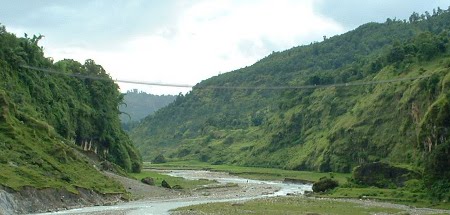
So I hopped on a city bus for Ghimire, got off at Chipledunga by accident, and made my way to the hanging bridge to Bhalam. I am unjustifiably nervous around things with more than four legs, turbulence in airplanes, people whose language I speak poorly, pretty women with intense stares that make me think I’ve missed something, ambiguous deadlines, and a few other odds and ends. But, I am flatly terrified of heights. The hanging bridge is steel, with stabilizing cables and fenced-in sides, and is basically the next safest thing after sitting on a park bench and eating peanuts. But, I shuffled slowly, steadily across, my hands on the railing despite the sharp wires used to tie the side-fencing. Next to the sign that says ‘Welcome to Balam, an area where open defecation is prohibited,” I sat to watch the river below, and saw with some shame a little kid come barreling down the bridge as fast as his legs would take him. “Okay,” I thought to myself abashedly, “I will not concede this to groundless fear: on the way back I will not hold on to anything.”
So, I walked back steadily, arms by my side but rising towards the railings every time my concentration wavered. Sometimes slower, sometimes looking straight down, but always advancing, chanting slowly. As it turns out, I have learned four things by heart in my life. One I can’t keep in order just now, one is for ritual use outside my community, one is an ancient Greek admonition, and one was especially inappropriate to the task. Nabokov rendered it memorably in English:
Do you recall the cry
Of gray Melchizedek as he prepared to die?
Man, he exclaimed, is born a slave; a slave
He must descend into the grave
And Death will hardly tell him why
He haunts the magic vale of tears,
Suffers and weeps, endures and disappears.
So I made do. Focusing all my conscious effort on trying to remember a few short snippets of Attic Greek in order, the river below and the gently swaying cables did not penetrate sufficiently into my awareness to incite terror. As I neared the far edge, the Greek phrases stuck fast enough in my memory to keep their order despite the pounding of my heartbeat, and I began to chant louder.
The bridge began a resonant swaying, and I knew someone must be walking up behind me. Not looking forward to the sensation of being passed, I walked faster. As I finally neared the edge of the gorge with some relief, a voice behind me asked
“Why are you surprised?”
“I’m not surprised!” I replied absurdly.
“Why so mysterious?”
the voice rejoined. I reached the cliff, and a few moments later stepped off the bridge onto solid ground. It was fair, I thought, for him to find me mysterious. After all, I was using twenty-three hundred year old magic to master my thoughts. This repetition of a mantra, is, in its own way, perhaps a bit like prayer. I turned to say this to him, but there was no one walking behind me.
I think I have a fair idea of what a person might reasonably accept as a minor miracle, were they inclined to. It turns out that I have an intellectual commitment that such experiences are so readily believable that a great many must be misinterpretations of chance accidents. Therefore, I am obliged to assert that the kid ten meters down the bridge watching the river, who did not keep walking in my direction, had been behind me until he spoke, but then turned and walked some distance away and stopped. This is, on the whole, a perfectly reasonable explanation. Besides, everyone knows God does not speak to one in a Nepali accent.
Kathmandu March 20, 2013
Posted by newsthatstaysnews in Uncategorized.add a comment
I rode Yeti. How cool is that? But I’m getting ahead of myself. Kathmandu is grey, but the passenger’s backpacks are many colors, and all pretty gnarly. The Israeli who’d sat next to me on the Chennai-Delhi leg of the flight spoke Hindi, which entertained the cab drivers preposterously, and then we got a cheap ride to the monkey temple on the way, way other side of the valley. It was too way other side, so we came back to Thamel. All the backpackers stay in Thamel. Accordingly, Thamel has three things cheap: hookers, weed, and beds.
So some guy standing in the dark in front of our hostel asked me “you want sex? girls?” A sharp feminist would probably point out why he didn’t say “sex? women?” Anyway, there were ‘dance bars’ everywhere on the streets, and frankly prostitutes, too. so I’m sure he was for real. I guess Nepal is poor, like Bihar is poor, and yet there are rich white dudes with gnarly backpacks everywhere, so you get the whole vertigo-inducing inequality tourist extravaganza. It hurts to think if it was your people who had to put it on.
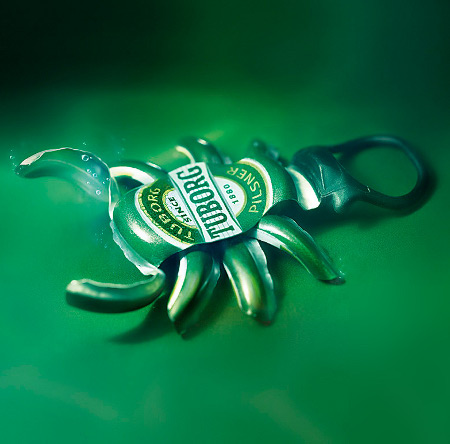
Halfway from Chennai to Beijing, we chilled in a Chinese restaurant and drank local Tuborg. My cab-wrangling pal objected to Buddhism because it made him give up, not sensual pleasure or a mute conscience, but just actually being able to do bad stuff when he felt like it. We ordered some Mapo Doufu, which was halfway from Beijing to Chennai, too. In Chennai, for comparison, I ate something dry and crimson called ‘sapo tofu’, which translates from Spanish as ‘frog tofu’, and from English (as a 成语) as ‘morbid curiosity aptly rewarded.’ I wondered how he lived like this, without a home, and he said it was all about keeping up with old friends daily on facebook, and not minding that the new ones never stuck around. Living without a home was a pretty big hit with some old Spanish dude the next table over and his way younger Chinese girlfriend, who hadn’t had one in many, many years. Actually, who am I kidding, it might have been with some old Taiwanese chick and her way younger Catalan boyfriend – it pays to be skeptical. Anyway, this led to another detailed discussion of the proper growing conditions for maria, humidity this time rather than sunlight, and why it thrives in Nepal but just isn’t quite right.
Cheap hotel rooms, though, that I like. The guy who let me stay in a clean (enough) bed with a clean (enough) bathroom for $6 also called his cousin and asked where to go Salsa dancing on a friday night. So I walked two kilometers to this place ‘Cube’. They were playing something with a four count, so I looked at the maybe six guys in black coats lounging by the entrance and asked ‘Salsa?’ and they motioned me through. Sure enough, three sides of the dance floor were lined with dudes just watching and drinking, not dancing. Probably how salsa nights pay for themselves, actually. But what was happening in the middle was salsa, and I know the drill by now, so I just walked over to the fourth side and asked a nepali woman to dance. A few nepalis later, each of whom had told me she ‘wasn’t very comfortable with salsa’, I asked some american to dance the next song with me. The DJ threw on a jive song, which was really, really not good for six-step. Okay, next salsa song? They threw on something like a bollywood hit for closing time, and that brought everyone out of their chairs. Okay, next life. I checked out and headed for the hotel.
In the morning, I got on Yeti.
In the morning, I got off Yeti.
I tried for the next Air India flight, but I’d just missed it by fifteen minutes, so I had six hours to burn in the city. I walked a few kilometers to the really, really big Boudhanath Stupa (half a Qutb minar tall), walked around it a few times, wasn’t moved. Walked back, rested by knees by the Chabahil stupa. No tourists, no tourist swag. Just middle aged men hanging with their friends, and young women texting. It was cool. I spun a prayer wheel. I like this side of the valley better. I got up and walked into the Pashupatinath temple.
The funeral pyres by the Bagmati river (which ends up in the Ganges, and is sacred), are public and open. I’d never seen a shroud-wrapped body stacked up on top of cordwood and lit. I’d never watched a man patiently push the logs around to keep the pyre piled up high as the fire shrank and things shifted, and throw straw on it to get it hot again. Never heard the ‘plop’ that logs and body bits make as they’re swept into the river. I was moved, but more as a confirmation than as a revelation. Yup, we die. We go ‘plunk’. Some guy washes our ashes down with a bucket. La Rochefoucauld said ‘neither death nor the sun can be looked at steadily’, and older folks mostly agree with him, so maybe I wasn’t looking at death, just at body parts. I sure wasn’t looking at the sun. Kathmandu is grey. 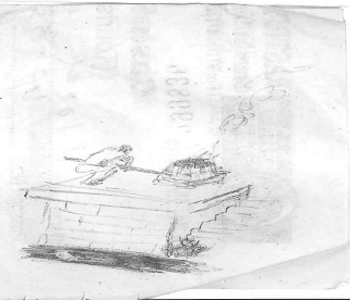
I made it back in time to hop my flight, and pick up Gandhi’s autobiography where I’d left it. It was a long flight. I hadn’t eaten in 30 hours for the reasons up there, and here he’s doing that kind of thing every other day just for exercise. Guy’s wife comes, says ‘I don’t want to touch an untouchable’. To which Gandhi replies ‘okay, then. I swear I won’t eat for two weeks’. His wife is all sad, and says “alright, alright, I’ll touch an untouchable. just eat, ‘kay?” And Gandhi says “too late, already swore. no food for two weeks.” Somehow, his proudest moments have a habit of happening when he’s standing in front of his wife, and she’s crying.
So Gandhi wants to love everybody the same, but he’s been hitched since thirteen, and his wife was knocked up twice before he went to college, and now what? Is it weird that he finds it gross how badly he’s wanted to lay a woman he treated like a servant, who’s illiterate and uneducated and to whom he can’t read the Bhagavad Gita in sanskrit? He’s pretty serious about that disgust, too, sort of like the whole Aristotelian virtue-continence thing, where not doing stuff you want to do is kinda idiotic, but wanting to do stuff that just messes you up is really, really idiotic. It’s only, he says, when you’re actually horrified by bad things that you can swear not do them, and only when you go all in that you stand any chance at all.
So he wants to be everyone’s dad, and he is, kinda, in a ‘you know you wanting to be an english major is straining your father’s already weak heart, young lady, he’d hoped for so much more from you’ kinda way. If you’re young and liberal, and rich, and educated and all that, you may not have a damned clue what I’m talking about. But some mill-workers go on strike against some mill-owners, and he’s cool with both sides, but then the mill-workers get rowdy and hurt people, so he’s says he’s just not going to eat until they get it together and end the strike. And his buddies the mill-owners are like: ‘now we have to concede or you’re gonna die, brother, what’s up with that?’ And he says it has nothing to do with them, and it’s ’cause of something the workers did, and what does he know if that means they’ll have to concede.
But, he’s not so good to his actual kids. Doesn’t bother letting them get educated, ’cause character’s what’s important, anyway. Maybe if they follow him on his three mile walk to work, he’ll talk to them about some stuff outside of themselves and their playmates, but then again if someone else shows up and asks a question, maybe not. After all, why should they have all the advantages he had had, before he gave up the ones that can be given up, the easy ones?
So, let me be clear. He believes in what he believes in, and he doesn’t care if that’s painful. None of this modern-day three-hour hunger strike against the war; he’s willing to hurt himself to make other people do what he wants. Feel how you want to feel about this kind of nonviolent resistance, about pointing the gun in your own face instead of putting it down, but respect his courage. He gets farther into heads of people who don’t like him that I get into my own head on a bad day, and he gets way far into the heads of people who he doesn’t have to think about at all. A lot of the other Congress showboats, not just from how he tells it, either, think freedom is when people shovel your latrines, but you don’t shovel anyone else’s. So, respect where it’s due. I don’t like a lot of his other stuff, but then again all these bad stories about him are stories he wrote into his own autobiography, so that’s cool, too.
I guess it’s like this: I think if you try real hard to live a good life, you get a pretty good life, not immunity to colon cancer and faster healing of broken bones. I’d take that, though. Getting to see the Himalayas with my own eyes was a blessing, and unless, like the Israeli, travelling’s what you are about, it’s a blessing you can’t earn or deserve in any real way; you can’t keep it longer than it’ll stay, and maybe you wouldn’t want to. They’re cool and you gotta relish them, and then your plane lands, and you go do what it is that you are about. Am I getting ahead of myself?
 News That Stays News